

Change facilitator, strategist, speaker. Prof. of Practice in Health & Care Improvement @WarwickBSchool. Advisor @HorizonsNHS. Senior Fellow @TheIHI. Views own.
Coventry England
- Tweets 18,791
- Following 21,025
- Followers 136,913
- Likes 47,437

I’m celebrating! Today I completed my last day in a full time job after 40 years of being a public servant. I’ll be back in a couple of weeks as a part time strategic adviser to @HorizonsNHS with the time & space to support health & care transformation in wider ways

354
56
2,946
When I think back over my 40 year career, the best, most impactful times were when I had a boss who understood me & who believed in me. Maybe as leaders, we should all aspire to be that boss that others remember. Sketchnote by @anujmagazine based on a tweet by @ValaAfshar

82
854
2,652
I'm having lots of conversations with people about how tired everyone is feeling right now. This graphic from the brilliant @EmmaNeuropsych offers some clues. It's time for some self love and care

23
879
2,143
A powerful new visual of the famous Desmond Tutu quote, created by @Juliet_Young1: ‘We need to stop just pulling people out of the river. Some of us need to go upstream and find out why they are falling in’.

44
713
1,940
235,898
Many people who, like me, are in the latter part of our careers understand that our role is increasingly about planting trees. This means developing the people who'll be our successors & helping them to shine. It also involves getting more radical about change. Art: @ImpactWales

37
378
1,837
178,676
My dad was a sailmaker & he was brilliant at sewing. He taught me & I studied art & textiles to A level. Then I stopped. I’ve just completed my first piece of textile art after a 40 year gap & it’s hanging over my fireplace. It took me 200 hours. #NeverTooLateToResumeWhatYouLove

116
22
1,746
In health & care, we often focus on a narrow concept of improving "staff experience", when we could be building a much deeper & more profound basis of human connection at work: a sense of belonging. Belonging is when an employee, regardless of their background or role, knows that their voice matters, that their unique experiences enrich the team & that they're not just seen, but understood. Organisations that build a sense of belonging have higher levels of engagement, retention & performance: linkedin.com/pulse/belonging… By @hacking_hr

44
594
1,618
320,569
Belonging at work really matters. Employees with a strong sense of belonging outperform others on almost every metric, from engagement & retention to performance & wellbeing. Good leadership supports belonging: People with an effective manager are 6X more likely to feel this sense of belonging. Six ways to gauge belonging at work based on research:
1) Overall sense of belonging: I feel a strong sense of belonging at my organisation
2) Welcomed: I feel warmly welcomed at in my organisation (first day, new team, new role)
3) Known: I feel known as an individual at work
4) Included: I feel included at work (can be myself, my opinions are valued, can respectfully disagree)
5) Supported: I am supported at work in achieving my personal & professional development goals
6) Connected: I feel a strong connection with peers and colleagues
Download a great free toolkit ("blueprint") for building belonging: achievers.com/resources/whit… Thank you @Achievers

35
526
1,543
233,138
How to recognise emotional intelligence (EQ): seven traits. As we move into a different future, beyond #Covid19 we need lots of EQ. Thank you for the sketchnote @ImpactWales

20
526
1,503
Yesterday I posted "the 25 micro-habits of high impact managers" that often go unnoticed, but can make a massive difference to the health/performance of a team, by @firstround bit.ly/2U3IhNR. @tnvora did a brilliant job turning it into a sketchnote #AYearofTweets2021

20
501
1,442
I joined the NHS on 7 Sept 1991 - 30 years ago today. I joined via a scheme to recruit leaders from other sectors with the potential to be NHS CEOs within 5 years. I never got to be a CEO - I became an NHS improvement leader (the best job in the world) & I'm still happily there.
73
29
1,442
A powerful way to rethink imposter syndrome. Flip to a growth mindset: "The highest form of self-confidence is believing in your ability to learn". Thank you @tnvora

21
421
1,419
This week I start my new role as Professor of Practice in Health and Care Improvement at @WarwickBSchool. I'm excited to be part of the new centre for health & care improvement that WBS is establishing. I will continue to act as Strategic Advisor to @HorizonsNHS. There is such potential in the interface between change leadership practice & research.

191
44
1,374
184,231
The psychological safety hierarchy of needs at work by @heidipsychology. I appreciate how Heidi has created three categories. At the base are basic safety needs like not being micromanaged. Next is psychological needs like belonging & sense of esteem. At the top is self-fulfilment needs, the ability to be our true, authentic selves. People who work at the top of their pyramid are the ones with the potential to deliver the best performance.

24
504
1,393
252,119
Marshall Ganz, who is a massive influence on my practice as a leader of change, defines leadership as "taking on the responsibility of creating conditions that enable others to achieve a shared purpose in the face of uncertainty". This graphic by @lizandmollie reminded me of it

32
402
1,359
Just because someone is high up on the organisational ladder doesn't make them influential. If it did, top-down change projects would always succeed. There are other factors that create influence far more than status does qaspire.com/2015/12/21/real-… By @tnvora #100RepeatTweets no.35

27
496
1,335
I put together a deck of 33 slides made up of graphics I created for Twitter posts in 2021. Each one is a gem of wisdom from other people's work that can give us perspective, ideas or models for change. The original articles are easy to find: slideserve.com/HelenBevan/sl…


43
295
1,322
Data is critical to improvement but without a meaningful context that people can connect with, it's hard to use data to motivate change. When we explain data with a compelling story that links to people's values & sense of shared purpose, magic happens #QITwitter Art: @gapingvoid

33
381
1,234
Too often when we think about ways to "improve productivity", it's about changing the process so we can get more work done with the same or less. Yet the most powerful ways to improve productivity are relational & behavioural, linked to purpose. Great graphic by @positivepresent

28
466
1,246
How to be trusted: 1) Walk the talk 2) Keep commitments 3) Behave consistently 4) Don't misrepresent the truth 5) Don't withhold information 6) Don't gossip 7) Don't throw others under the bus 8) Keep confidences 9) Support others smartbrief.com/original/2020… #100RepeatTweets no. 49

13
417
1,236
A systematic review of research on workplace breaks shows that:
1) Regular micro breaks can be better than longer breaks
2) Outdoor breaks & fresh air are better than indoor breaks
3) Scrolling social media is the most common break type but it creates emotional exhaustion
4) Spending a break with a furry companion is beneficial
hbr.org/2023/05/how-to-take-… Via @ZhannaLyubykh Graphic @DariusForoux

34
457
1,213
300,172
When leaders create 3 key conditions they get better outcomes from people. 1) Autonomy: do not micro-manage or enforce bureaucratic rules 2) Competency: give positive feedback 3) Relatedness: build teams with a sense of belonging ckju.net/en/dossier/why-basi… Via @CQ_Net @anafabrega11

12
397
1,213
"Mattering" is the belief that we’re significant to the world around us. When people feel they matter, they feel seen, important & needed through how others treat them. Scholars have deemed mattering to be a core instinct that drives all human behaviour. That’s why, when someone doesn’t believe they matter at work they:
- won’t share their voice if they don’t believe their voice is significant
- won’t use their strengths if they don’t believe they have strengths
- won’t contribute if they don’t believe they have something to contribute
- won’t care as much as if they feel cared for
Actions that leaders/ teams can take: see some excellent articles by @ZachMercurio - "How to Create Mattering at Work": zachmercurio.medium.com/how-… and "The Cost of Not Mattering at Work": zachmercurio.medium.com/the-….

29
437
1,188
179,451
Adaptive leadership means shifting from being the leader who “knows it all” to the leader who's a “learn it all.” Five critical leadership skills for creating an environment in which learning things the organisation does not know how to do is valued over implementing flawlessly what it knows already:
1) Cross-cutting: leaders with more diverse networks create more value for the organisation.
2) Collaborating: fostering psychological safety to increase team performance.
3) Coaching: having critical conversations that develop others’ potential,
4) Culture shaping: shaping organisational culture by changing processes & systems.
5) Connecting: growing in empathy and authentic leadership.
onlinelibrary.wiley.com/doi/…. By @HerminiaIbarra. Graphic: @tnvora

27
457
1,182
141,417
Maslow's hierarchy of needs is one of our best known/best loved models in leadership. Yet Maslow never presented it as a pyramid or hierarchy. @dhambeukers has redrawn it as circles. I like the addition of a 6th component: our need to be part of & protect the bigger system, whether it's our community or the planet medium.com/design-leadership…

38
350
1,156
192,450
The old rules & hierarchies are being thrown out of the window. People are looking for integration of work & well-being. We need to build teams, practices & processes that are not just high-performing but have a strong fabric of trust woven in: qaspire.com/2021/11/29/signs… By @tnvora

30
492
1,180
In a fearless organisation, people feel psychologically safe to challenge current thinking & practice, without fear of being criticised, shunned or ridiculed. It's tough to build a fearless organisation but people & performance levels flourish in them. By @AmyCEdmondson @tnvora

18
487
1,148
Researchers at MIT have questioned whether SMART goals (specific, measurable, achievable, realistic, time-bound) actually work. They suggest we might get better outcomes if we make our goals FAST not SMART: sloanreview.mit.edu/article/… Via @mitsmr @Haypsych #100RepeatTweets no. 33

30
420
1,163
Over the years, I've learnt that the best, highest performing teams are those where everyone feels a sense of belonging & appreciation for the unique & different things they bring to the team. So I'm happy to post this blog & sketchnote on "things boldly inclusive leaders do". They build an inclusive culture through foundations of continuous learning, active listening, authentic communication & creating a psychologically safe environment for people to thrive: qaspire.com/what-boldly-incl…. Thank you @minettenorman for the principles & @tnvora for your powerful interpretation.

15
490
1,168
157,817
Psychological safety: Safety is not the same as comfort. A leader's role is not to protect their team from discomfort. It’s to protect them from harm - and to help motivate them to push through the discomfort and harness it for growth: shorturl.at/RXZ34 By @shanesnow

24
369
1,123
Humility matters in senior leaders. A new study found when there's a more humble CEO at the helm, its leadership team is more likely to collaborate, share information, jointly make decisions & have a shared vision: createvalue.org/wp-content/u… Via @AmyCEdmondson Graphic @julianstodd

23
354
1,113
If there's one thing we've learnt about leadership since #COVID19 hit, it's the importance of the "soft stuff". Why leadership humility is going to work a lot better than arrogance in the future: ceoworld.biz/2020/07/04/bein… V @BenRenshaw @AmyCEdmondson @tnvora #100RepeatTweets no. 76

18
423
1,123
Empathy is the heartbeat of leadership. Seven ways to practice it:
1) Show genuine care & concern
2) Be present
3) Ask questions
4) Listen to understand
5) Be curious, not judgemental
6) Connect through emotion
7) Act with compassion
Thank you @DannyLangloss @Brilliant_Teams

14
435
1,112
120,229
It’s easy to think “it’s just a few minutes.” But as the number of people that you hold up increases, the true cost of being late scales rapidly. Being 10 mins late to a meeting with 10 others is 100 minutes. I'm doing some work on improving meeting practice currently so this sketch speaks to me. It comes from @sketchplanator, one of the most impactful visual artists on Twitter.

70
261
1,111
338,175
“The signs that you have a great manager are the actions you don't think about until later". Here are 25 little daily habits of managers that often go unnoticed, but that can make a massive difference to the health & performance of the team bit.ly/2U3IhNR By @firstround

15
378
1,088
"Everyone shines given the right lighting". That's our job as leaders. Thank you @sherrillknezel

14
281
1,075
As much as 80% of the knowledge in an organisation is undocumented. That's why networks, communities of learning/practice & sharing conversations are often more effective than good practice repositories/portals, metadata or search systems: nickmilton.com/2021/11/why-y… TY @nickknoco

37
379
1,052
As leaders of complex system change, we should value the creation of relationships as a key outcome in its own right:
- We need to stop trying to design the solution & instead design for the conditions that enable the emergence of many solutions
- Fostering more, quality & trusted relationships is a critical enabler of that emergence.
Time spent building relationships & networks is not 'fluffy’. Rather, it's an investment in legitimacy & better outcomes. Superb piece by Bill Bannear of @ThinkPlace: medium.com/@bill.bannear/the…

45
361
1,031
263,458
We often use "empathy" & "compassion" interchangeably, but they're different. We should connect with empathy & lead with compassion. Compassion means having a good understanding of what the other person is experiencing & a willingness to act: hbr.org/2021/12/connect-with… V @harvardbiz

26
354
1,010
As leaders, every situation we face and every person we encounter will be unique. But we can increase the odds of choosing the right thing to do if we remember these ten things about people: threestarleadership.com/lead… By @wallybock

14
390
1,026
My Twitter account got hacked and the hackers deleted all of the 35,000 accounts I was following. So if I’ve stopped following you, it isn’t personal. I can only follow a few people each day so it’s going to take a while to build my following list back up. Bear with me!
95
33
1,016
Too often, large scale change is seen as strategy & tactics by senior leaders, but no small group can drive change alone. It's why organisations with strong, trusting relationships are more likely to deliver transformational change: digitaltonto.com/2019/before… #100RepeatTweets no.67

16
290
1,058
A key role for leaders of change is to create a sense of belonging so everyone's seen & valued for their own unique selves. Diversity & inclusion are important, but belonging takes us a step further. When we feel we belong, we thrive, and so do the people around us. How to build a sense of belonging from @CCLdotORG social-legacy.com/a-culture-… Graphic: @emilychang_SL

22
350
1,032
180,197
Anyone who facilitates meetings or finds themselves having to organise the team away day should look at this fantastic free resource. It's the library of 1,000 facilitation techniques from @SessionLab. I use it often for ideas for sessions I'm leading: sessionlab.com/library

31
264
1,004
Leaders who create the time & space for team dialogue based on learning, trust & appreciation build engagement. And engaged teams experience more joy in work & get better outcomes. Graphic by @ImpactWales

11
396
1,021
148,162
Any team meeting, virtual or face to face, should always start with a team check-in, that is a core part of the agenda. Check-ins provide a massive psychological boost to our teams: aimyourteam.com/post/how-to-… Thank you @aimyourteam @dbarrath

23
334
997
I've just been writing about the critical role of tacit knowledge in change & improvement. As much as 80% of the knowledge in an organisation is tacit & undocumented. Yet this tacit knowledge is most likely to lead to big breakthroughs for innovation and improvement. That's why networks, communities of learning/practice & sharing conversations are often more effective than good practice repositories/portals, metadata or search systems: nickmilton.com/2021/11/why-y…… Recommended reading from @nickknoco

43
292
1,029
270,950
Is this what your house looks like now that you've been working from home for a whole year?

37
139
999
Now, more than ever, people need to feel a sense of connection at work. To be effective leaders, we have to care for & be connected to the people we lead. We must invest in understanding them & their lives. Empathy is what fuels connection: conantleadership.com/brene-b… Via @DougConant

18
374
1,004
Nearly 50% of NHS people are managed by a band seven leader. These leaders are key to performance gains & one of our greatest untapped leadership assets. See this from @BCG on the hidden potential of public sector frontline leaders: bcg.com/publications/2017/so… #100RepeatTweets no.28

37
338
984
We already knew empathy is an important leadership competency, but new research takes this further. Empathy promotes innovation, inclusion, collaboration, engagement & reduces work/home tension: hubs.ly/H0Z2sjY0 Via @Tracybrower108 @inspiredleader. Graphic: @ImpactWales

18
360
1,022
8 ways to influence without authority: 1) Character - lead by example & always follow through 2) Expertise 3) Information 4) Connectedness (relationships) 5) Social intelligence 6) Networking 7) Collaboration 8) Access to funding: seapointcenter.com/influence… By @JesseLynStoner @tnvor

14
324
953
Micromanagement has a terrible impact on psychological safety. Micromanaged teams always have low scores in assessments of psychological safety. To deal with it:
1) make efforts to find out if it's happening amongst the teams you lead (people usually don't tell spontaneously)
2) support people in their first leadership roles not to become micromanagers
3) if you're being micromanaged, take action with others
4) self-reflect on your own style
sites.google.com/schrag.ca/c… Via @jvschrag @tom_geraghty. Graphic: @someecards

20
289
962
192,415
We should invest in developing the character of our leaders. Character is a strategic asset: “Character is more than ethics... fostering a culture where it is valued equally alongside competence can result in better decisions & better outcomes”: sloanreview.mit.edu/article/… V @mitsmr

22
315
952
Many commentators talk about the importance of so-called "soft skills" for leadership into the future. @IDEOU has (so appropriately) rebranded them as "power skills". Here's their brilliant list of 12 key power skills:
1) Cultivating joy
2) Meaningful collaboration
3) Small-scale experimentation
4) Grounding in purpose
5) Creating community
6) Frame shifting
7) Leading with empathy
8) Emotional proofreading
9) Making room for more voices
10) Leading with questions
11) Finding balance
12) Agility
ideou.com/blogs/inspiration/…
Thank you @FerraroRoberto for the link & graphic

26
319
925
192,496
If we want improvement across a system, we need to hold each other to account for behaviours, not just outcomes. When leaders & teams behave respectfully to each other at work, they create the conditions for improvement far more than any outcome-oriented performance drive: bit.ly/3N5B0X3 Another great blog from @DrNicolaBurgess @WarwickBSchool. Tweetchat on this topic next Tues 6th June 7-8pm #LeadingQI

22
377
952
144,797
Such sad times. Just heard about the death of Alan Nobbs @Alannobbs. Alan was one of the best people I ever worked with. He was a developer of leaders, champion for well-being & passionate advocate & activist for improvement in the NHS. Alan was just an outstanding human being.

157
67
882
We can learn a lot from North East & North Cumbria integrated care system @NENC_NHS & their approach to improvement. Their goal isn't to "be the best" but to "be the best at getting better". This helps create a shared mission to build capability for change & to always keep improving. Graphic by @quotedvisually. Inspiration from @samanthallen & @annielaverty.

23
209
920
153,778
Workplace teams today don’t necessarily follow "traditional" development stages - forming, storming, norming & performing. Teams are increasingly dispersed, virtual, temporary & remote. Five characteristics of effective teams in a modern age: rgmcgrath.medium.com/hows-yo… By @rgmcgrath

16
286
895
8 ways to influence without formal authority: 1. Character (eg, being respectful & trustworthy) 2. Expertise 3. Information 4. Connectedness 5. Social intelligence 6. Networking 7. Collaboration & bridge building 8. Access to resources: seapointcenter.com/influence… By @JesseLynStoner

ALT When we shift from authority-based to influence-based leadership, we have to accept that we are not always in control. However, the reality is that we actually never were.
9
282
893
Taking breaks at work is critical if we want to avoid decision fatigue. Behaviours that might seem like “slacking” may actually be useful devices for staying productive.This applies whether we are working remotely or face to face: economist.com/business/2021/… Thanks @AbhijitBhaduri

16
313
904
I'm preparing for a talk on "leading change across boundaries" next week. I'm stressing the point that when we're leading change across silos & systems, we can't just be programme managers, we have to be systems convenors: bringing people together with shared purpose. For an excellent free eBook on systems convening from @SysConvening: wenger-trayner.com/wp-conten…

34
259
884
160,475
I had a conversation today about the difference between "kindness" & "niceness" in leadership so I decided to post about it. The article & graphic explain why, as leaders, we should choose kindness over niceness. Kindness is about caring enough to push people toward greatness, even when it’s uncomfortable. It’s a harder path but better in the long run:
learningandleadershipconsult…. By @emb928
Graphic: @thejustinmecham via @dangrimes1980

18
320
959
115,177
When we're setting goals for a change/improvement project, the standard advice is to think "SMART" (specific, measurable, achievable, relevant, time-based). @artpetty says it's time to move on from SMART goals: we need goals that are 1) learning-orientated (we can only achieve our improvement goals through learning) and 2) impactful (for people who use our services, for our organisations and for our population): artpetty.com/2023/06/25/its-…

40
275
895
177,027
What a lovely version of an advent calendar: an act of kindness to undertake every day in December. Thanks @actionhappiness @MiekeHaverkort

23
680
882
"Everyone shines, given the right lighting". What are we doing as leaders to give the right lighting to our team members and colleagues? What a powerful thought @sherrillknezel

22
290
879
Conversations about trust at work often focus on the relationship between leaders & their teams. As (or more) important is trust between team members. Research with 1,000 workers identified five trust-based behaviours that set the highest performing teams apart. These teams:
1) establish norms for collaboration
2) keep colleagues informed
3) share praise & credit for work done well
4) believe disagreements make them better
5) proactively address tensions in the team
Trust isn’t relayed by leaders from the top down. It’s built organically on a foundation of behaviors exhibited by all team members that enables everyone to produce their best
hbr.org/2024/01/how-high-per… By @RonFriedman

21
275
887
108,309
In praise of "connectors" in organisations & systems. Connectors are people with links to many others in different groups. They are often unnoticed & underappreciated, yet they play a vital role in change across systems: crossing silos, disseminating information & mobilising people into action. As we increasingly move into complex change across integrated systems we need more connectors: paulitaylor.com/2023/12/08/w… By @PaulIanTaylor #IHIForum

33
246
861
141,953
New research shows 5 things high-performing teams do differently: 1) Talk on the phone to each other 2) Have more productive meetings 3) Invest time in bonding over non-work topics 4) Show appreciation to each other 5) Behave authentically: hbr.org/2021/10/5-things-hig… By @RonFriedman
16
329
857
We can implement all the performance improvement initiatives or new quality systems in the world. But if leaders don't light the way to change through their own everyday behaviours & practices, it isn't going to stick. This new blog sets out powerful research evidence from the evaluation of the NHS/ @VM_Institute partnership: bit.ly/3ncbfJX Great job @DrNicolaBurgess @WarwickBSchool #LeadingQI #QITwitter

22
338
870
117,292
Psychological safety hierarchy of needs. There's a powerful premise. As leaders, we want our teams to do their best, most productive work. Yet our leadership behaviours - micro-managing, work dumping etc, can block this at a fundamental level. V @heidipsychology @Juliet_Young1

18
315
849
120,064
A Dutch proverb: "Trust arrives on a tortoise & leaves on a horse".
How to build trust like a tortoise:
1) Consistency
2) Transparency
3) Active listening
4) Fulfil promises
5) Respect boundaries
How to stop trust from eroding in a horse situation:
1) Acknowledge mistakes
2) Apologise sincerely
3) Make amends
4) Avoid repeat offences
mercecardus.com/how-trust-wo… by @MerceCardus. I learnt the proverb from @simongterry

18
297
857
125,937
Prevention is generally a better, cheaper option than treatment/cure. Yet often our systems are set up to encourage and reward treatment/cure. it's time to move upstream. Thank you @_workchronicles

13
239
803
Research into organisations/teams that have implemented "meeting free" days at work. It showed that "no-meeting" days improve autonomy, communication & engagement, resulting in decreased micromanagement & stress, which caused productivity to rise sloanreview.mit.edu/article/… V @mitsmr

28
262
791
The organisations with the best experiences/outcomes of change are typically those with a culture of learning: where everyone can try new things, maybe fail & feel supported & respected. It needs psychological safety: strategy-business.com/articl… By @AdamMGrant #100RepeatTweets no.46

11
349
817
Research into the behaviours of leaders who deliver transformational change. The factor that makes the biggest difference between those who deliver & those who don't is whether leaders embrace the emotional journey of their people. 6 behaviours that improve the odds of transformation success:
1) Leadership’s own willingness to change
2) Shared vision of success
3) Trust & psychological safety
4) Balancing implementation & creativity
5) Recognition that technology carries its own emotional journey
6) Shared sense of ownership over the outcome
hbr.org/2023/05/6-key-levers… V @DrAndrewWhite

25
323
818
160,019
Mid-level leaders ("middle managers") are likely to be the people playing a critical role in keeping our organisations going right now. Let's celebrate the outstanding contribution they are making: ft.com/content/a1740fb3-bd69… Via @FT Graphic @AbhijitBhaduri

14
194
812
Leading across a system requires a massive & ongoing commitment to the practice of collaboration. A new report from @TheKingsFund sets out six areas of practice for effective collaborative leadership:
1) create a safe, inclusive & trusting environment
2) build & maintain healthy relationships
3) create a shared purpose
4) manage power dynamics
5) surface and manage conflict
6) promote shared decision-making
kingsfund.org.uk/publication…. Thank you @nicolawalshkf

17
380
841
148,035
A new version of the iceberg graphic from my team @HorizonsNHS. Leaders (especially those at the top/centre of the organisation/system) tend to focus their actions on factors above the waterline. For deep, sustainable change, we also need to tackle issues below the waterline.

27
280
810
If, as leaders, we just remembered these ten things about people every time we encountered "bad" behaviour or a tricky situation, we might make a lot more progress: threestarleadership.com/lead… By @wallybock

11
293
813
You can't change the culture of an organisation by making a rational plan for it, or by declaring it or by restructuring. The only way to change culture is to change the way people work with each other over time. Think many small changes: strategy-business.com/blog/W… Via @stratandbiz
18
241
788
A beautiful free resource on storytelling for systems change. Written for an Australian context but widely relevant. Stories can help us to build empathy, shift mindsets, create connections, see new possibilities, heal, teach & learn: centreforpublicimpact.org/pa… Thanks @theasnow

13
225
791
For anyone who leads/facilitates workshops or planning sessions - virtual or face to face. @SessionLab has over 900 methods in its free library of facilitation techniques: sessionlab.com/library?utm_s… I particularly like the section labelled "action" - tools to create better decisions

33
246
777
We often see the "J curve" in change. We expect the change to lead to quick benefits, but things may get worse before they get better. This can lead to "leadership tinkering" where leaders don't allow time for benefits to kick in but start changing more things. Pic: @tom_geraghty

14
246
796
The characteristics of changemakers. The @designcouncil has studied change excellence in practice & identified the attributes of the most effective leaders of change across systems:
1) System thinker: has the ability to see how everything is interconnected in a bigger picture.
2) Leader and storyteller: can tell a great story about what’s possible and why this is important, engage people at all levels and see the work through.
3) Connector and convener: can build strong relationships, create spaces where people from different backgrounds come together and join the dots to create a bigger movement.
4) Designer and maker: has the technical and creative skills to make things happen.
designcouncil.org.uk/our-res… Graphic via @Brilliant_Teams

24
290
783
131,490
An excellent guide for managers covering how to help your team (and yourself): 1) By calibrating emotion 2) Work through uncertainty 3) Push back against perfectionism 4) Beat burnout. All four are factors that hold teams back: review.firstround.com/a-mana… By @firstround @lizandmollie


11
234
803
Download "A practical guide to kindness in the workplace" for free. Chapters include:
- The science behind kindness at work
- Kindness in leadership
- Operationalising kindness
- Promoting inclusion & diversity through kindness
- Kindness in performance management
- Measuring the kindness impact
It comes as an embedded flip book but if you make it full screen you can convert it to a pdf and share it: linkedin.com/feed/update/urn…. Thank you @hacking_hr

18
323
789
138,773
Being clever isn't enough to succeed. Why humility is the new smart leadershipnow.com/leadingblo… Via @LeadershipNow

13
671
780
Your leadership behaviour: Are you a multiplier or a diminisher? Multipliers bring out the best in those around them & help them to grow. Diminishers are smart people who don't help others around them to become as smart: qaspire.com/2019/03/31/leade… By @tnvora #100RepeatTweets no.82

16
314
767
We should embrace and support the mavericks, rebels, heretics & renegades in our organisations. Rather than being difficult troublemakers, they may just be the brilliant people who can shift us into a different future sloanreview.mit.edu/article/… Via @mitsloan #100RepeatTweets no. 70

27
220
783
After a year of home working, so many people are experiencing MS Teams fatigue or Zoom fatigue or whichever-virtual-platform-they predominately-use fatigue. Research on its impact & ways to alleviate it is now getting published. Great sketchnote @Haypsych vhil.stanford.edu/mm/2021/02…

17
345
747
Here's a great sketchnote from @BurnhamLandD on how leaders can enable a powerful culture of psychological safety in the workplace. The ways we behave, the relationships we build & the things we give priority to, create the conditions that enable our teams to do their best work.

21
330
779
"Hard skills" are specific technical knowledge & training. "Soft skills", eg authenticity & empathy, are a mix of what we’ve learned & where we’ve come from. We need both. The last 21 months have shown how key "soft skills" are. We need to call them something else @SusanDavid_PhD

37
229
740
It's time to dump the "leader" vs. "manager" distinction. It puts the practice of leadership on a pedestal and relegates the work of managers to some lower rung on the professional evolutionary ladder. Rather, we need more people at all levels who can inspire, motivate, teach, coach and bring out the best in our people as the world and technology shift in front of us: corp.smartbrief.com/original… Via @artpetty @RogerFrancis1

32
188
750
119,421
When I think back over my own career, the times when I felt I could do my best work & was most supported, was when I had an affirming leader. Sincere words of affirmation don't take much effort & have a disproportionate impact on people’s self-esteem. As leaders, we should never underestimate the power of our own influence. People never forget the impact of lifting, affirming words: cambridgenetwork.co.uk/blog/…. Via @CambNetwork Graphic: @hacking_hr

19
236
740
102,329
What's the difference between psychological safety & trust? Psychological safety consists of beliefs concerning the norms of the team– what it means to be a member of that team. Trust focusses on the beliefs one person has about another: psychsafety.co.uk/the-differ… By @tom_geraghty

23
300
759
Starting team meetings with a check-in &/or having regular team check-ins is such an important part of leadership practice. Check-ins prime the behaviours that make collaboration possible. Here's a website with some great check-in resources: checkinsuccess.com/what/ & a framework for an end of week check-in, if you wanted to start tomorrow. Graphic: @heyamberrae via @TCI_ca

21
220
766
115,982
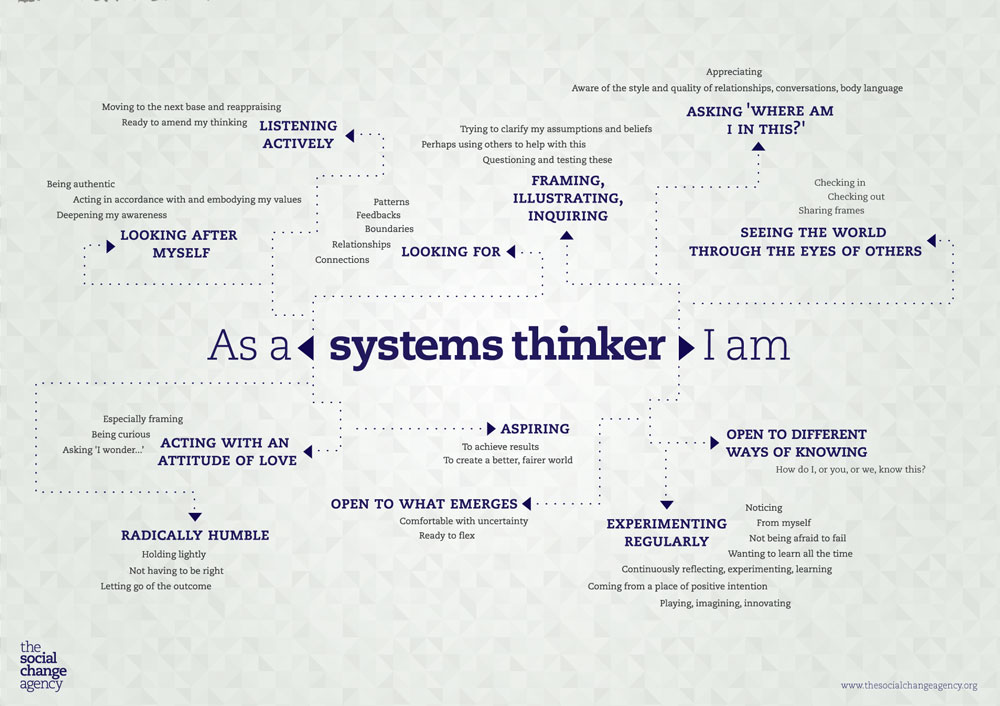
The NHS is moving to a "systems" mindset (rather than single organisations/silos) so we can better support people in their health & care. We must role model "systems" in how we think & behave as leaders: thesocialchangeagency.org/wp… @anosikec @SocialChangeAg #100RepeatTweets no. 73

29
248
745
The pandemic experience has shown the importance of compassionate leadership. We need to move to "wise compassion", based on leadership competence, deep understanding of what motivates people & leading others to achieve priorities: hbr.org/2020/12/compassionat… #100RepeatTweets no. 86

13
279
744
Recognition at work matters. People who feel "recognised" by leaders are 40% more engaged. There's a growing movement towards "reflective recognition" where leaders get their team members to reflect on & share what they're proud of & why: hbr.org/2022/10/a-better-way… By @BeyondThankU

22
231
742